Five stories. One pattern. And a warning creative firm leaders can’t afford to ignore.
But you have something special: a room where it’s safe to be wrong. Before we get to that, consider…
AI is already doing what you charge for. Briefs. Headlines. Visual directions. Brand narratives. HTML Sites. Films. From functional to fabulous, and all of it fast. Clients are using it. Some are using it instead of you.
And the disruption won’t be slow. The deaths I’m about to describe came fast. Some came in an afternoon. One in a single meeting.
You’ve heard these stories before. But you need to take another look. Why? Because you’re in them.
Cautionary Tales are Predictive
In 1979, engineers at Xerox’s research lab in Palo Alto invented the graphical user interface — windows, icons, a mouse. The technology that would make personal computing accessible to everyone on earth. They locked it in the lab. Management didn’t understand what they had.
Steve Jobs visited. He walked out knowing exactly what he’d seen. Six years later, the Macintosh changed the world. Xerox watched.
In 1975, a Kodak engineer named Steve Sasson built the world’s first digital camera. In-house. He brought it to management.
Their response: “That’s cute — but don’t tell anyone about it.”
Kodak filed for bankruptcy in 2012.
In 2007, Steve Jobs announced the iPhone. Days later a reporter asked Microsoft CEO Steve Ballmer what he thought.
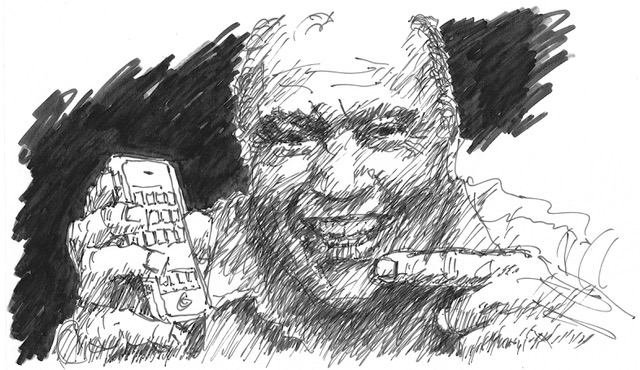
Ballmer laughed. Said the iPhone was too expensive, had no keyboard, wasn’t a good email machine. Smirked: “Apple is selling zero phones a year.”
He was the CEO of the most powerful software company in the world. Surrounded by smart people. Performing his certainty in public.
Microsoft’s mobile business never recovered.
In 2000, Netflix’s founders flew to Dallas and offered to sell their company to Blockbuster for fifty million dollars. Blockbuster CEO John Antioco called it a niche business. Called the whole idea dot-com hysteria.
The Netflix co-founder later recalled that Blockbuster executives laughed them out of the room.
Blockbuster filed for bankruptcy in 2010. Netflix is worth over two hundred billion dollars. One Blockbuster store remains.
In 2013, Nokia announced it was selling its mobile division to Microsoft. At the press conference, CEO Stephen Elop ended his remarks with this: “We didn’t do anything wrong. But somehow, we lost.”
He reportedly had tears in his eyes.
The Person Missing from the Room Where it Happened
Five stories. The same failure every time.
Xerox didn’t know what they had. Kodak knew and buried it. Ballmer laughed in public. Antioco laughed in private. Elop wept at the end.
Notice what’s missing from every one of those rooms: someone who felt safe enough to say the hard thing out loud.
The firms I watch struggle aren’t struggling because they lack talent. They’re making Ballmer’s argument — quietly, to themselves. They’re Antioco, in their certainty. They’re doing nothing wrong by yesterday’s standards while tomorrow arrives without them.
That is where you are. Right now.
Who Pushes Back?
Here is the one question that matters. Not the strategy question — the human one.
Do you have anyone around you who would tell you if you were wrong? Would they feel safe enough to say it?
The best creative firms have something no corporation can manufacture and no AI can replicate: a room where it’s safe to be wrong.
Where someone can put an unpopular idea on the table and not be dismissed. Where a junior person can say what she actually sees. Where failing at something new is the cost of figuring it out — not evidence that you don’t belong. Where working for the common good is the actual norm, not the poster on the wall.
The corporate world has been trying to build this room for decades. They put it on the all-hands agenda. And then the meeting ends and the same people dominate and the same ideas die and the same unspoken rules take back the floor.
Ballmer had a building full of smart people. What was missing was the room where someone could say, “Steve, I think you’re laughing at the wrong thing.” Antioco had a conference table full of executives. Not one said, “Maybe we should hear these people out.” Elop inherited a company where no one had been telling leadership what was actually happening for years.
They thought they were making the right decisions. Because no one was safe enough to say otherwise.
You have something none of them had. A human-scale organization where the culture is still yours to shape. Where people are close enough to each other that trust is still possible. Where someone can walk into a room, say the uncomfortable thing, and be heard.
The firms that survive will have used that — built a place where people felt safe enough to figure out the new tools together, try things that might fail, say what they actually see.
That room is yours to build. Build it now. The next Ballmer moment is already happening somewhere. Make sure it isn’t yours.