I’ve long recognized that we creatives tend to be more in touch with our emotions and our vulnerability than other professionals. But when we’re negotiating, vulnerability is viewed as weakness. We have this notion that strength, not vulnerability, wins the contract.
My experience shows differently. Here’s a story for you.
I was meeting with a successful executive. We were discussing her needs for a design project. I was feeling extremely vulnerable, partially because I was competing against two design powerhouses, both of whom had vastly more street cred than I. At the time, I ran a small design firm that had just gotten smaller.
I desperately wanted the work. Actually, I needed the work to meet payroll. Things weren’t going well. The past week I’d sold a collector car to raise some cash. My partner, I should say former partner, had just left to start her own firm with half our staff and clients. “Pay attention,” I told myself. “I’m not going to win this if I don’t stay engaged.”
I had managed to get a meeting with my potential client. And it seemed by her tone and demeanor that I was the only firm she was meeting with. That was good. I felt lucky. Midway through the meeting, another executive stuck his head into her office, and ignoring me, said, “Connie, I need to see you ASAP.”
Connie replied, “I’ll be with you in a half an hour, Bud.” Bud rolled his eyes and left.
“Whoa,” I thought to myself. “That was weird. That must have been brother Bud.” I knew from studying the company that it was a family business. Dad was CEO. Connie and her three brothers were the executives.
Connie turned to me and said, “Sorry about that. That’s my brother Bud. He’s in charge of sales and often in a hurry. He can wait.”
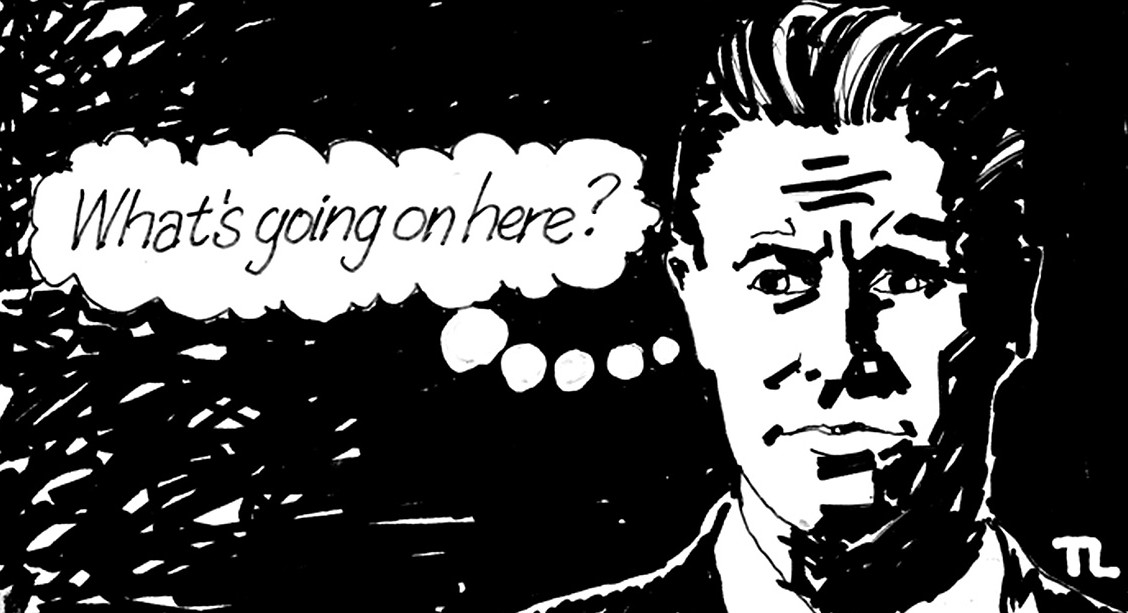
I thought to myself, “He’s in a hurry, and he has no respect for his little sister, even though she’s in charge of marketing, and in my experience, sales reports to marketing. There’s something going on here. I need to understand more.”
- What are your barriers to growth?
- How are your products viewed by prospects and customers?
- What are your competitors doing? And so on.
I liked Connie. She answered my questions with clear, precise answers. She corrected inaccurate assumptions, where appropriate. Connie clearly knew her stuff. But throughout this conversation, the memory of her brother’s rude interruption was in the back of my mind. I realized that I could help Connie gain her brothers’ respect by defining, with her help, a much larger project that could really help her company. With a little luck, this insight could enable me to land a great new client, competitors be damned.
In that instant, I knew I needed to become her ally.
In hindsight, I know my anxiety helped me, because I was in touch with my vulnerability and fear. I’ve found that when I’m vulnerable, I can see others’ needs more clearly, which allows me to connect with them on a deeper level. From that place of openness, I was able to perceive Connie’s emotional state and to detect her unease. That prompted me to probe more deeply about her and her business. Our conversation led me to recognize that running the business with her three brothers was challenging; they didn’t take her seriously, and they questioned her professionalism.
And that was how I won the contract. I inspired her confidence and gained her trust, all through vulnerability. It was not manipulative; you can’t fake empathy. I genuinely understood her needs, and knew I could help her gain stature in the eyes of her brothers and business partners.
Together she and I discussed her needs. We developed a strong rapport built on trust and empathy. And we worked together to create a plan that solved a more fundamental problem than she had initially described.
Together, we did some research into customer preferences. Together we assembled a presentation, which she led, and I supported, in the meeting with her brothers and her dad.
She hit it out of the park, and I got a great new client.
You might consider trying this the next time you are negotiating a new gig. Try embracing your vulnerability and using your empathy as a strength. Make an effort to understand your client’s emotional state and their underlying fears. You might just find that you are on the same team. And in those moments, vulnerability will win the contract the right way: with your client’s best interest in mind.
In negotiation, there is strength in vulnerability.
How about you? Do you have a negotiation story in which your vulnerability strengthened your position? Let’s talk more in the comments.