A few days ago, Dr. Barbara Sumner left a comment on something I’d written.
Barbara spent her career studying human adoption. Not the sentimental version; the structural one. She quoted my line back:
“…the particular vigilance required of a child who could not afford to misread the room.”
Hard-won clarity, she called it. Then she asked the question she’s spent decades asking:
What else could we have done, she and I, if we hadn’t spent our lives making sense of this instead?
I didn’t have a comforting answer. I still don’t. What I had was something truer.
Here’s what I told her.
Our world criminalizes the poorest and the weakest for having sex outside the lines the rich and powerful draw for everyone else; lines they give lip service to and routinely break themselves. Sex is a basic human need. Criminalizing it in the people with the least power creates a nice, steady inventory of babies. Babies that can then be placed, priced, and used.
We were both part of that inventory. Understanding that has taken most of our lives.
I want to sit with that word for a minute, because I chose it on purpose.
Inventory.
Not child. Not orphan. Not blessing. Inventory: something counted, sorted, and moved according to someone else’s need.
I was placed conditionally. Fostered off and on for years, I learned early that the ground would shift under me without warning. My only defense was to read the room before the room decided. I didn’t call it a skill. It didn’t feel like one. It was survival.
It took me sixty years to understand that vigilance wasn’t a personality trait. It was a job. A job I was given before I could walk. A job assigned by people who would never have to explain it.
That’s the part that took the longest to see.
Not that I was hurt. I got that. It was that the hurt was structural, built by people who wrote the rules for everyone else while exempting themselves. The wealthy didn’t need the law to govern their own sex lives. They’ve needed it to govern everyone else’s, and to make something useful out of the wreckage: Inventory.
I think about the world my clients build creative work in — the money moving upstream, the humans moving down and out, those at the top never quite having to account for what the arrangement costs the people beneath. It’s the same shape. It’s always the same shape. Somebody sets the rules, exempts themselves, and calls what’s left an opportunity for someone else.
Barbara says it plainly. She doesn’t flinch, and she doesn’t perform the flinch either. She just asks who benefits, and who pays. It’s a simple question.
Almost nobody in power wants it asked out loud.
I was inventory once. So was she. Neither of us asked to be counted that way, and neither of us can go back and be counted differently.
What we can do is notice, out loud, when it’s happening again. It usually is.
The vigilance I learned as a child reading a room I couldn’t afford to misread: that’s still the only tool I have.
I didn’t choose it. I’d probably trade it away if I could. But it’s mine now, earned the hard way, and it’s the one thing nobody managing the inventory ever thought to take.
—
Barbara’s book, On Human Adoption and the Manufacture of Identity, is where this thinking comes from. Go read her.
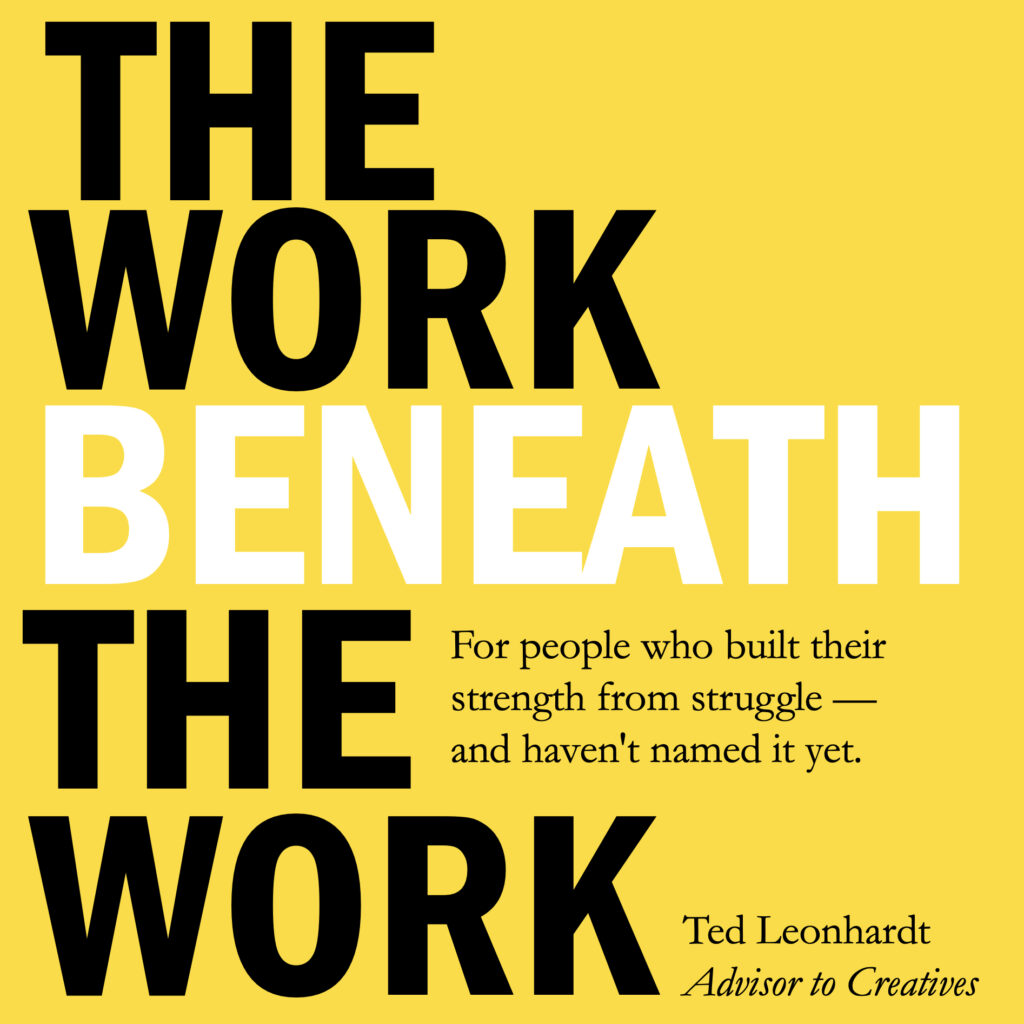
The Work Beneath the Work is out now as an ebook. A softcover print edition is coming Summer 2026.